
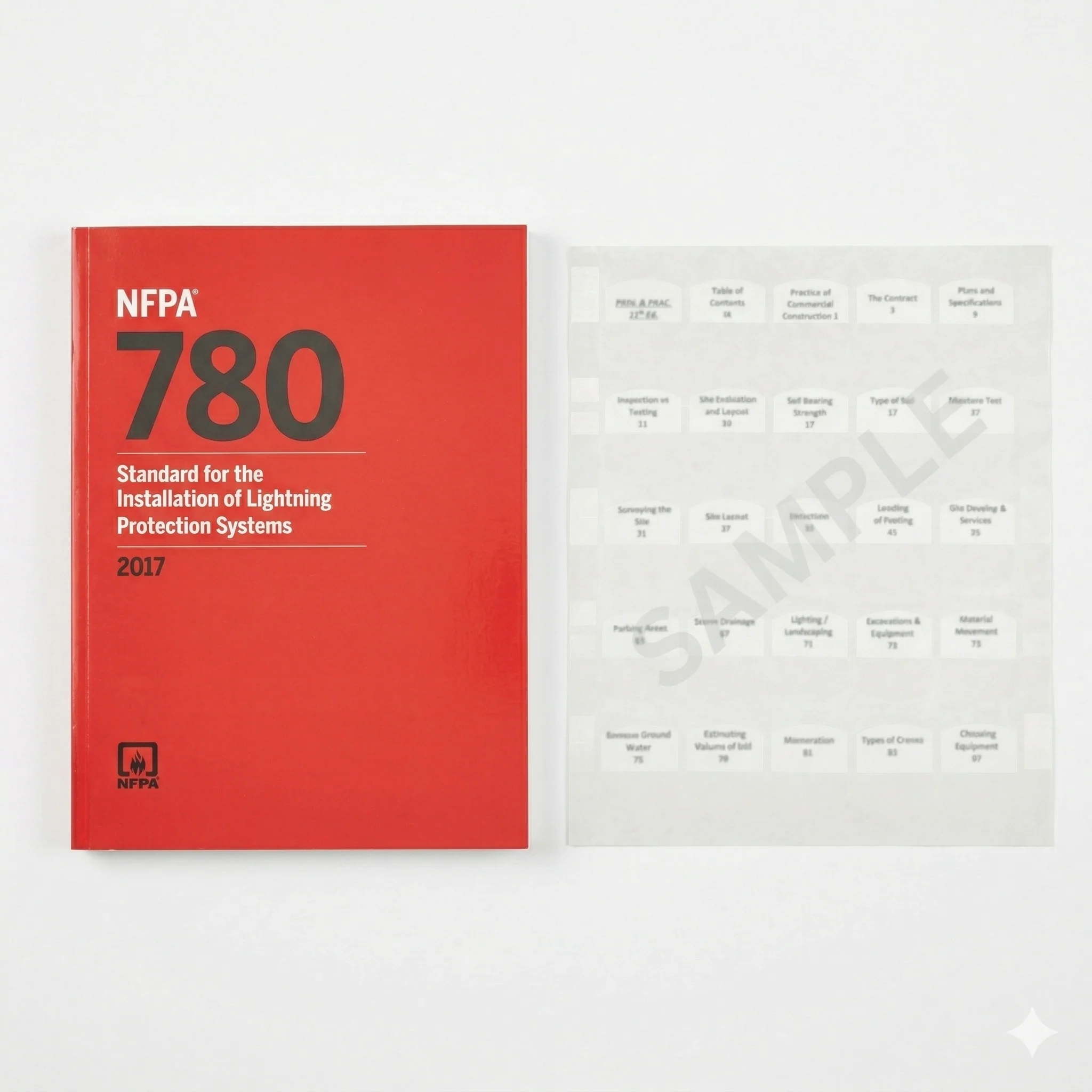
NFPA 780: Standard for the Installation of Lightning Protection Systems, 2017 Edition
Major changes in the 2017 edition of NFPA 780 provide greater oversight and new understanding of lightning protection systems and lightning hazards.
Reflecting the latest protection methods, devices, and safety challenges, the 2017 edition of NFPA 780: Standard for the Installation of Lightning Protection Systems is the new industry benchmark for protecting lives and property from fire and related dangers associated with lightning events.
Determine the right protection scheme for different occupancies.
Lightning hazards exist everywhere, but depending on the use of a building or structure, different lightning protection protocols exist. This edition of NFPA 780 helps you recognize hazards and provide appropriate protection.
- Updated Section 5.3 pertaining to facilities that handle or process combustible or explosive dust now presents specific references to NFPA® standards addressing dust hazards, including NFPA 61: Standard for the Prevention of Fires and Dust Explosions in Agricultural and Food Processing Facilities, NFPA 122: Standard for Fire Prevention and Control in Metal/Nonmetal Mining and Metal Mineral Processing Facilities, and NFPA 664: Standard for the Prevention of Fires and Explosions in Wood Processing and Woodworking Facilities.
- Rewritten Chapter 7 addresses protection for structures containing flammable vapors, flammable gases, or liquids that can give off flammable vapors.
- New definitions include ground loop conductor, integral lightning protection system, mast-type lightning protection system, rated impulse withstand voltage level (withstand voltage) (u w), smart structure, solar array, and solar panel.
Other changes assist facility managers, installers, inspectors, and AHJs:
- Added requirements in this edition -- concerning physical on-site inspections of completed installations and periodic inspections or testing -- may be required at the discretion of the AHJ.
- Updated figures illustrate air terminal protection for lower roof protection.
- New requirements cover test and connection points for concrete-encased electrodes to enable periodic maintenance and testing of the ground system.
- New bonding requirements address long horizontal metal bodies on roofs.
- Numerous new requirements pertain to ungrounded metal bodies.
- This edition includes re-evaluated and revised zero property line conditions.
- New Annexes cover technologies used in state-of-the-art systems: Annex J, Protection of Smart Structures; and Annex K, Guide to International Standards Dealing with the Selection of SPDs for Use on Photovoltaic (PV) Installations.
Make sure you're prepared to reduce lightning risks. Trust your jobs to the 2017 NFPA 780. (Softbound, 112 pp., 2017)
NFPA® 780 Standard for the Installation of Lightning Protection Systems, 2017 Edition
Chapter 1 Administration1.1 Scope.
1.2 Purpose.
1.3 Listed, Labeled, or Approved Components.
1.4 Retroactivity.
1.5 Mechanical Execution of Work.
1.6 Maintenance.
1.7 Units of Measurement.
Chapter 2 Referenced Publications2.1 General.
2.2 NFPA Publications.
2.3 Other Publications.
2.4 References for Extracts in Mandatory Sections.
Chapter 3 Definitions3.1 General.
3.2 NFPA Official Definitions.
3.3 General Definitions.
Chapter 4 General Requirements4.1 General.
4.2 Materials.
4.3 Corrosion Protection.
4.4 Mechanical Damage or Displacement.
4.5 Use of Aluminum.
4.6 Strike Termination Devices.
4.7 Strike Termination Devices on Roofs.
4.8 Zones of Protection.
4.9 Conductors.
4.10 Conductor Fasteners.
4.11 Masonry Anchors.
4.12 Connector Fittings.
4.13 Grounding Electrodes.
4.14 Common Bonding of Grounded Systems.
4.15 Potential Equalization.
4.16 Bonding of Metal Bodies.
4.17 Metal Antenna Masts and Supports.
4.18 Concealed Systems.
4.19 Structural Metallic Systems.
4.20 Surge Protection.
Chapter 5 Protection for Miscellaneous Structures and Special Occupancies5.1 General.
5.2 Masts, Spires, Flagpoles.
5.3 Facilities That Handle or Process Combustible or Explosive Dust.
5.4 Metal Towers and Tanks.
5.5 Air-Inflated Structures.
5.6 Concrete Tanks and Silos.
5.7 Guyed Structures.
5.8 Roof Top Helipads.
5.9 Fabric Structures.
Chapter 6 Protection for Heavy-Duty Stacks6.1 General.
6.2 Materials.
6.3 Strike Termination Devices.
6.4 Conductors.
6.5 Fasteners.
6.6 Splices.
6.7 Reinforced Concrete Stacks.
6.8 Bonding of Metal Bodies.
6.9 Grounding.
6.10 Metal Stacks.
6.11 Metal Guy Wires and Cables.
Chapter 7 Protection for Structures Containing Flammable Vapors, Flammable Gases, or Liquids That Can Give Off Flammable Vapors7.1 Applicability.
7.2 Principles of Protection.
7.3 Protective Measures.
7.4 Protection of Specific Classes of Structures.
Chapter 8 Protection of Structures Housing Explosive Materials8.1 Application.
8.2 General.
8.3 Types of Lightning Protection.
8.4 Grounding.
8.5 Bonding.
8.6 Surge Protection.
8.7 Protection for Specific Facilities.
8.8 Metallic Fences.
8.9 Maintenance and Inspection.
8.10 Inspection, Testing, and Maintenance.
Chapter 9 Protection for Wind Turbines9.1 General.
9.2 Fundamental Principles of Protection.
9.3 Protection of Electrical and Mechanical Control Systems.
9.4 Grounding.
Chapter 10 Protection for Watercraft10.1 General.
10.2 Materials.
10.3 Strike Termination.
10.4 Conductors.
10.5 Grounding.
Chapter 11 Protection for Airfield Lighting Circuits11.1 General.
11.2 Application.
11.3 Purpose.
11.4 Airfield Lighting Counterpoise System.
Chapter 12 Protection for Solar Arrays12.1 General.
12.2 Fundamental Principles of Protection.
12.3 Strike Termination Devices.
12.4 Protection of Electrical and Mechanical Systems.
12.5 Grounding.
Annex A Explanatory Material
Annex B Principles of Lightning Protection
Annex C Explanation of Bonding Principles
Annex D Inspection and Maintenance of Lightning Protection Systems
Annex E Ground Measurement Techniques
Annex F Protection for Trees
Annex G Protection for Picnic Grounds, Playgrounds, Ball Parks, and Other Open Places
Annex H Protection for Livestock in Fields
Annex I Protection for Parked Aircraft
Annex J Protection of Smart Structures
Annex K Guide to International Standards Dealing with the Selection of SPDs for Use on Photovoltaic (PV) Installations
Annex L Lightning Risk Assessment
Annex M Guide for Personal Safety from Lightning
Annex N Reserved
Annex O Informational References
9781455914210
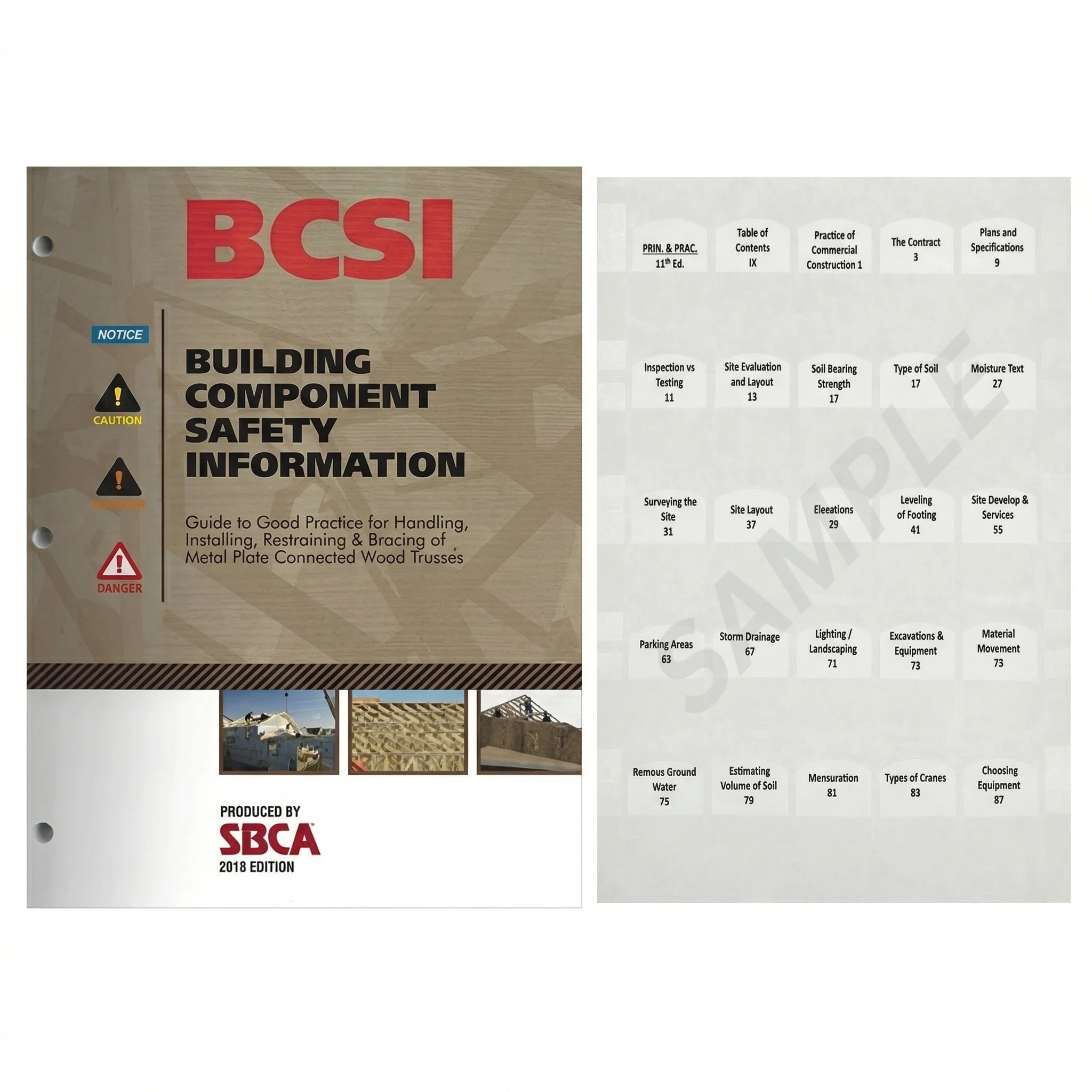
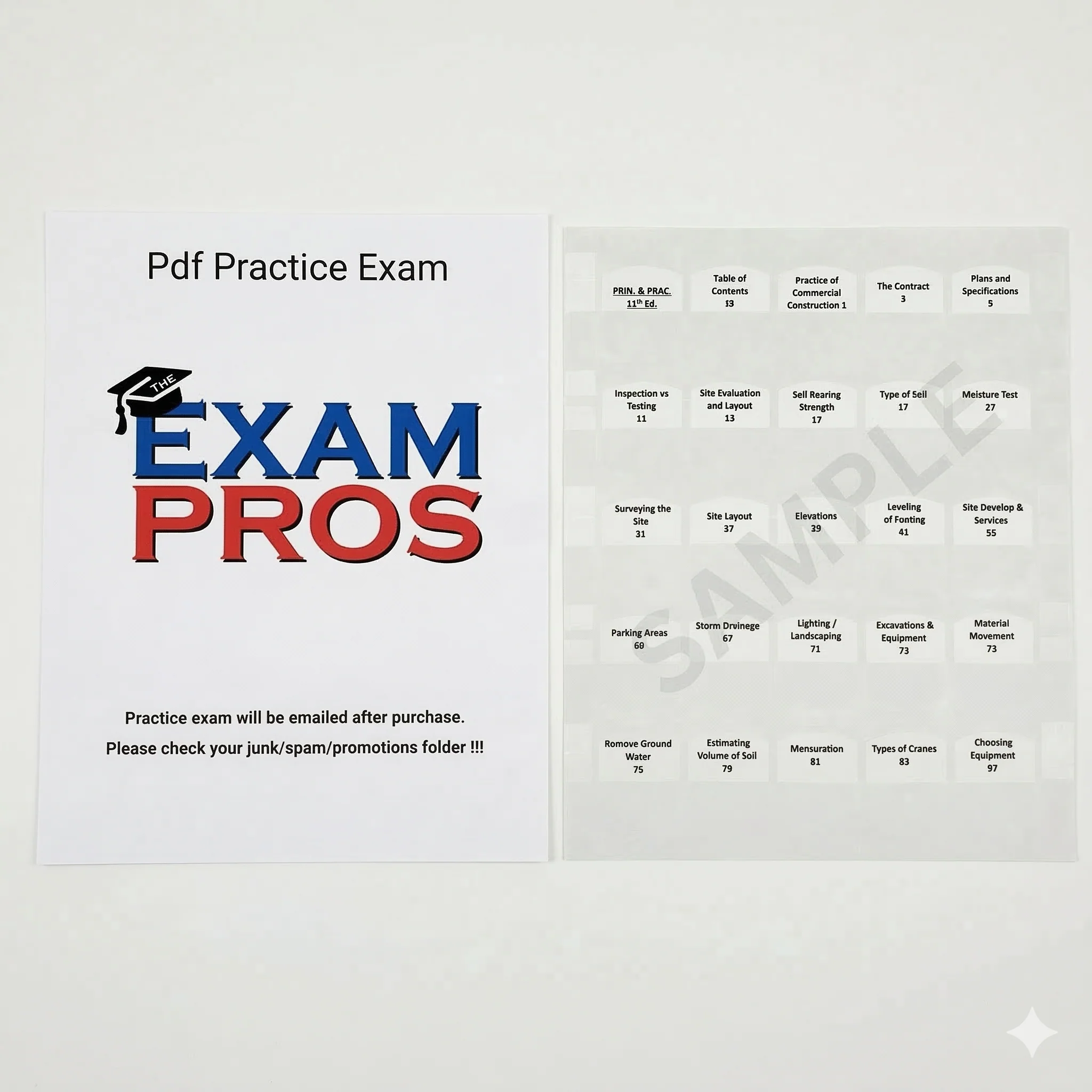
You can purchase it new or professionally Highlighted & Tabbed for your exam.
Why Most Highlighted & Tabbed Books Fall Short?
Many contractor exam prep schools sell highlighted and tabbed books. Only one created the system—and perfected it through real-world use. That system was created by Rob Estell, a licensed contractor, President, and Founder.
Open-book contractor exams don’t test how much you know. They test how quickly you can locate the correct answer inside dense reference manuals. Rob learned this firsthand by taking exams himself and later confirmed it through years of feedback from thousands of exam candidates.
While other schools offer highlighted and tabbed books, most:
- Use minimal or generic highlights
- Rely heavily on the existing Table of Contents and Index
- Miss exam-tested material that isn’t clearly referenced
- Provide tabs that point to broad sections, not precise answers
The result? Students still waste time searching.
Rob decided that “good enough” wasn’t good enough.
Why The Exam Pros ORIGINAL, detailed-driven highlighted and tabbed books? Thousands of contractors have passed their exams using Rob Estell’s highlighted and tabbed books because they solve the real problem:
- Knowing the answer
- But not being able to find it fast enough
Built from Contractor Experience & Student Feedback
Rob Estell’s system is built using:
- His own experience as a licensed contractor
- Personal exam feedback from real testing environments
- Thousands of data points from exam students nationwide
A Proven, Detail-Oriented Navigation System
Each book follows Rob’s proven 3-step method:
- Table of Contents – Identify the general section
- Precision Tabs – Jump directly to the exact topic
- Strategic, Detailed Highlights – Land on the answer instantly
Our highlights are thorough and detail-oriented, guiding your eye exactly where exam answers are located—not just coloring pages for appearance.
- Every highlight is intentional.
- Every tab exists because the book failed to guide the reader quickly enough.
- If a topic cannot be found efficiently through the Table of Contents or Index, it gets a custom tab and targeted highlight.
These books are designed to help you outperform the clock, not just prepare!
Original: $12.99
-65%$12.99
$4.55Product Information
Product Information
Shipping & Returns
Shipping & Returns
Description
Major changes in the 2017 edition of NFPA 780 provide greater oversight and new understanding of lightning protection systems and lightning hazards.
Reflecting the latest protection methods, devices, and safety challenges, the 2017 edition of NFPA 780: Standard for the Installation of Lightning Protection Systems is the new industry benchmark for protecting lives and property from fire and related dangers associated with lightning events.
Determine the right protection scheme for different occupancies.
Lightning hazards exist everywhere, but depending on the use of a building or structure, different lightning protection protocols exist. This edition of NFPA 780 helps you recognize hazards and provide appropriate protection.
- Updated Section 5.3 pertaining to facilities that handle or process combustible or explosive dust now presents specific references to NFPA® standards addressing dust hazards, including NFPA 61: Standard for the Prevention of Fires and Dust Explosions in Agricultural and Food Processing Facilities, NFPA 122: Standard for Fire Prevention and Control in Metal/Nonmetal Mining and Metal Mineral Processing Facilities, and NFPA 664: Standard for the Prevention of Fires and Explosions in Wood Processing and Woodworking Facilities.
- Rewritten Chapter 7 addresses protection for structures containing flammable vapors, flammable gases, or liquids that can give off flammable vapors.
- New definitions include ground loop conductor, integral lightning protection system, mast-type lightning protection system, rated impulse withstand voltage level (withstand voltage) (u w), smart structure, solar array, and solar panel.
Other changes assist facility managers, installers, inspectors, and AHJs:
- Added requirements in this edition -- concerning physical on-site inspections of completed installations and periodic inspections or testing -- may be required at the discretion of the AHJ.
- Updated figures illustrate air terminal protection for lower roof protection.
- New requirements cover test and connection points for concrete-encased electrodes to enable periodic maintenance and testing of the ground system.
- New bonding requirements address long horizontal metal bodies on roofs.
- Numerous new requirements pertain to ungrounded metal bodies.
- This edition includes re-evaluated and revised zero property line conditions.
- New Annexes cover technologies used in state-of-the-art systems: Annex J, Protection of Smart Structures; and Annex K, Guide to International Standards Dealing with the Selection of SPDs for Use on Photovoltaic (PV) Installations.
Make sure you're prepared to reduce lightning risks. Trust your jobs to the 2017 NFPA 780. (Softbound, 112 pp., 2017)
NFPA® 780 Standard for the Installation of Lightning Protection Systems, 2017 Edition
Chapter 1 Administration1.1 Scope.
1.2 Purpose.
1.3 Listed, Labeled, or Approved Components.
1.4 Retroactivity.
1.5 Mechanical Execution of Work.
1.6 Maintenance.
1.7 Units of Measurement.
Chapter 2 Referenced Publications2.1 General.
2.2 NFPA Publications.
2.3 Other Publications.
2.4 References for Extracts in Mandatory Sections.
Chapter 3 Definitions3.1 General.
3.2 NFPA Official Definitions.
3.3 General Definitions.
Chapter 4 General Requirements4.1 General.
4.2 Materials.
4.3 Corrosion Protection.
4.4 Mechanical Damage or Displacement.
4.5 Use of Aluminum.
4.6 Strike Termination Devices.
4.7 Strike Termination Devices on Roofs.
4.8 Zones of Protection.
4.9 Conductors.
4.10 Conductor Fasteners.
4.11 Masonry Anchors.
4.12 Connector Fittings.
4.13 Grounding Electrodes.
4.14 Common Bonding of Grounded Systems.
4.15 Potential Equalization.
4.16 Bonding of Metal Bodies.
4.17 Metal Antenna Masts and Supports.
4.18 Concealed Systems.
4.19 Structural Metallic Systems.
4.20 Surge Protection.
Chapter 5 Protection for Miscellaneous Structures and Special Occupancies5.1 General.
5.2 Masts, Spires, Flagpoles.
5.3 Facilities That Handle or Process Combustible or Explosive Dust.
5.4 Metal Towers and Tanks.
5.5 Air-Inflated Structures.
5.6 Concrete Tanks and Silos.
5.7 Guyed Structures.
5.8 Roof Top Helipads.
5.9 Fabric Structures.
Chapter 6 Protection for Heavy-Duty Stacks6.1 General.
6.2 Materials.
6.3 Strike Termination Devices.
6.4 Conductors.
6.5 Fasteners.
6.6 Splices.
6.7 Reinforced Concrete Stacks.
6.8 Bonding of Metal Bodies.
6.9 Grounding.
6.10 Metal Stacks.
6.11 Metal Guy Wires and Cables.
Chapter 7 Protection for Structures Containing Flammable Vapors, Flammable Gases, or Liquids That Can Give Off Flammable Vapors7.1 Applicability.
7.2 Principles of Protection.
7.3 Protective Measures.
7.4 Protection of Specific Classes of Structures.
Chapter 8 Protection of Structures Housing Explosive Materials8.1 Application.
8.2 General.
8.3 Types of Lightning Protection.
8.4 Grounding.
8.5 Bonding.
8.6 Surge Protection.
8.7 Protection for Specific Facilities.
8.8 Metallic Fences.
8.9 Maintenance and Inspection.
8.10 Inspection, Testing, and Maintenance.
Chapter 9 Protection for Wind Turbines9.1 General.
9.2 Fundamental Principles of Protection.
9.3 Protection of Electrical and Mechanical Control Systems.
9.4 Grounding.
Chapter 10 Protection for Watercraft10.1 General.
10.2 Materials.
10.3 Strike Termination.
10.4 Conductors.
10.5 Grounding.
Chapter 11 Protection for Airfield Lighting Circuits11.1 General.
11.2 Application.
11.3 Purpose.
11.4 Airfield Lighting Counterpoise System.
Chapter 12 Protection for Solar Arrays12.1 General.
12.2 Fundamental Principles of Protection.
12.3 Strike Termination Devices.
12.4 Protection of Electrical and Mechanical Systems.
12.5 Grounding.
Annex A Explanatory Material
Annex B Principles of Lightning Protection
Annex C Explanation of Bonding Principles
Annex D Inspection and Maintenance of Lightning Protection Systems
Annex E Ground Measurement Techniques
Annex F Protection for Trees
Annex G Protection for Picnic Grounds, Playgrounds, Ball Parks, and Other Open Places
Annex H Protection for Livestock in Fields
Annex I Protection for Parked Aircraft
Annex J Protection of Smart Structures
Annex K Guide to International Standards Dealing with the Selection of SPDs for Use on Photovoltaic (PV) Installations
Annex L Lightning Risk Assessment
Annex M Guide for Personal Safety from Lightning
Annex N Reserved
Annex O Informational References
9781455914210
You can purchase it new or professionally Highlighted & Tabbed for your exam.
Why Most Highlighted & Tabbed Books Fall Short?
Many contractor exam prep schools sell highlighted and tabbed books. Only one created the system—and perfected it through real-world use. That system was created by Rob Estell, a licensed contractor, President, and Founder.
Open-book contractor exams don’t test how much you know. They test how quickly you can locate the correct answer inside dense reference manuals. Rob learned this firsthand by taking exams himself and later confirmed it through years of feedback from thousands of exam candidates.
While other schools offer highlighted and tabbed books, most:
- Use minimal or generic highlights
- Rely heavily on the existing Table of Contents and Index
- Miss exam-tested material that isn’t clearly referenced
- Provide tabs that point to broad sections, not precise answers
The result? Students still waste time searching.
Rob decided that “good enough” wasn’t good enough.
Why The Exam Pros ORIGINAL, detailed-driven highlighted and tabbed books? Thousands of contractors have passed their exams using Rob Estell’s highlighted and tabbed books because they solve the real problem:
- Knowing the answer
- But not being able to find it fast enough
Built from Contractor Experience & Student Feedback
Rob Estell’s system is built using:
- His own experience as a licensed contractor
- Personal exam feedback from real testing environments
- Thousands of data points from exam students nationwide
A Proven, Detail-Oriented Navigation System
Each book follows Rob’s proven 3-step method:
- Table of Contents – Identify the general section
- Precision Tabs – Jump directly to the exact topic
- Strategic, Detailed Highlights – Land on the answer instantly
Our highlights are thorough and detail-oriented, guiding your eye exactly where exam answers are located—not just coloring pages for appearance.
- Every highlight is intentional.
- Every tab exists because the book failed to guide the reader quickly enough.
- If a topic cannot be found efficiently through the Table of Contents or Index, it gets a custom tab and targeted highlight.
These books are designed to help you outperform the clock, not just prepare!